
Support Finder
Choose how you want help, then search WRD answers, videos, documents, and service paths.
Popular Questions
52 answersOrange Bat QC is often the easiest first recommendation for individual technicians and flexible work. Spider is a strong fit for shops that want a more standardized removal process. Bison is aimed at larger panels and heavier-duty use.
Answer
The best tool depends on the type of work, technician preference, and how standardized the process needs to be.
- Orange Bat QC is often a practical first choice for individual technicians, first-time users, repair centers, and body shops because it supports flexible technique and both drill and hand-crank operation.
- Spider is a strong WRD removal system for shops that prefer a more consistent, repeatable procedure across technicians.
- Bison is the larger Bat-style option for larger glass panels, commercial-vehicle work, or technicians who prefer a larger setup.
Choose Orange Bat QC when flexibility and hand-crank/drill options matter. Choose Spider when the shop wants a more standardized workflow.
Answer
Orange Bat QC is generally more flexible in technique and supports both hand-crank and drill operation. That makes it a good fit for many individual technicians, body shops, and first-time WRD users.
Spider is usually a better fit where a shop wants technicians following a more consistent removal procedure. It is a strong removal system, but it is less forgiving of technique variation than Orange Bat-style systems.
Bison is a larger, heavier-duty Bat-style system for larger glass panels, commercial vehicles, and technicians who prefer a larger setup.
Answer
Bison is the larger, heavier-duty Bat-style WRD removal system. The main reasons to choose it over Orange Bat are larger glass panels, commercial-vehicle work, heavier-duty use, or technician preference for the larger setup.
Use Orange Bat QC when hand-crank operation matters. Spider systems are mainly drill-driven removal systems.
Answer
If hand-crank operation is important, start with Orange Bat QC. It is built around both hand-crank and drill operation.
Spider systems are a better fit when the shop wants a compact, standardized drill-driven removal workflow.
Orange Bat QC adds quick-connect operation and updated handling around the body, spindle access, and attachment workflow.
Answer
Orange Bat QC is the newer quick-connect version of the Orange Bat platform. It is built for easier attachment changes and updated handling around the body, spindle access, and ratcheting/spindle workflow.
The practical difference is connection style. If your tool uses QC hardware, match accessories and replacement parts to the QC version rather than the older Orange Bat layout.
PRO6 helps one technician set and position glass during installation. It is not a cutting-line removal tool.
Answer
PRO6 is for installation and glass-setting work. It supports the glass so one technician can control movement and placement instead of carrying the full weight by hand.
Use Orange Bat, Spider, Bison, or the 4-inch Dock for cutting-line removal. Use PRO6 when the job is about setting, supporting, or positioning the replacement glass.
P8 and PN8 are similar line types. P8 has markings; PN8 does not.
Answer
P8 and PN8 are fundamentally similar, but P8 includes markings and PN8 does not. P8 is often preferred for Spider use because the markings help technicians manage the amount of line on a typical job. PN8 is often paired with Orange Bat use because Bat-style applications can vary more, including quarter glass and other dynamic approaches.
Match the line to the tool, glass gap, urethane, and whether the job needs speed, salvage, or durability.
Answer
For Spider-style work, marked line such as P8 helps the technician manage how much line is in the cut. For Orange Bat-style work, unmarked line such as PN8 can make sense because the setup changes more from job to job.
For tight gaps, look at thinner line options. For heavy urethane or commercial glass, look at heavier-duty line and make sure the tool can handle the load.
Avoid steel wire in WRD fiber-line tools unless the tool instructions explicitly allow it.
Answer
WRD fiber-line systems are built around compatible cutting line. Steel wire can cause premature wear or tool failure and may not be covered under warranty.
If the cut needs more aggression, choose a stronger WRD line rather than forcing steel wire through a fiber-line setup.
Load only enough line for the cut. An overfilled spool can push into the spindle, cover, or wing and damage the tool.
Answer
Do not pack the spool full. Too much line creates outward pressure as it winds, especially if the line starts stacking to one side.
Load only what you need for the job, keep the line feeding evenly, and stop if the spool starts building pressure against the cover or spindle.
Uneven spooling creates side pressure. Stop, unload tension, and reset the line before it damages the spindle or cover.
Answer
If line starts collecting on one side of the spool, stop and unload tension before continuing. Uneven buildup can push against the spindle, cover, or plastic wing.
Reset the line path, check how much line is loaded, and keep the line feeding evenly. Continuing under heavy side pressure can damage components.
Clean the glass and cup, pump until the indicator is set, then watch whether suction drops right away or slowly over time.
Answer
Start simple: clean the glass and suction cup, then test on a clean, smooth piece of glass. Pump until the indicator is fully set.
If it will not build suction, check the cup edge for dirt, cuts, folds, or anything preventing a seal. If it builds suction but slowly loses it, the pump seal, O-ring, cup face, or surface condition may need attention. A dry pump O-ring can sometimes need lubrication; a worn or damaged cup may need service or replacement.
Extra pump strokes usually mean the cup is not sealing cleanly, the surface is dirty, or the pump seal needs attention.
Answer
If the pump takes more strokes than normal, clean the glass and cup first. Then test on a clean, smooth surface.
If suction improves, the issue was likely surface or cup contamination. If it still takes too many strokes or the indicator creeps back out, check the cup edge, pump action, and O-ring condition.
Stop and reset the tool. Check suction, cup placement, line path, and whether the line is pulling the tool sideways.
Answer
If the tool moves during use, stop and reset before continuing. Check that the cup is sealed, the glass is clean, and the tool is placed so the line load is not pulling it sideways.
Also check the line path and amount of line on the spool. A poor line angle or uneven spool load can put pressure in the wrong direction and make the tool shift.
Spindle, cover, or wing damage is often caused by too much line, uneven line buildup, or side pressure during the cut.
Answer
Common causes include too much line on the spool, line collecting on one side, an off-center load, or pulling at an angle that puts pressure into the spindle or cover.
Prevention is mostly line control: avoid overloading the spool, keep the line feeding evenly, and stop if the line starts stacking to one side.
Use the video guides when you need to see setup, line routing, tool placement, or workflow differences in action.
Answer
Video guides are often the fastest way to understand WRD tools because setup, line routing, tool placement, and technician movement are easier to see than describe.
If you are choosing between tools, start with the comparison and removal workflow videos. If you are troubleshooting, look for videos that show the same tool family and setup style.
Warranty coverage depends on the purchase date, seller, product condition, and the issue being reported.
Answer
Warranty coverage depends on the purchase date, seller, product condition, and the type of issue. Use the warranty policy page for the current terms.
If the tool needs service, use the service request form and include the purchase and product details requested there.
Include receipt/order number, seller, purchase date, product/SKU, photos or video, shipping address, and phone number.
Answer
For the fastest review, include:
- receipt or order number
- seller or reseller
- purchase date
- product name or SKU
- photos or a short video showing the issue
- shipping address
- phone number for courier delivery
Serviceable tools are usually repaired with parts first. Full replacement is for cases where repair is not the right path.
Answer
If a tool can be serviced, replacement parts or repair are usually the first path. That gets the tool working again without replacing parts that are still good.
Full replacement is for cases where the tool is not serviceable or repair does not make sense.
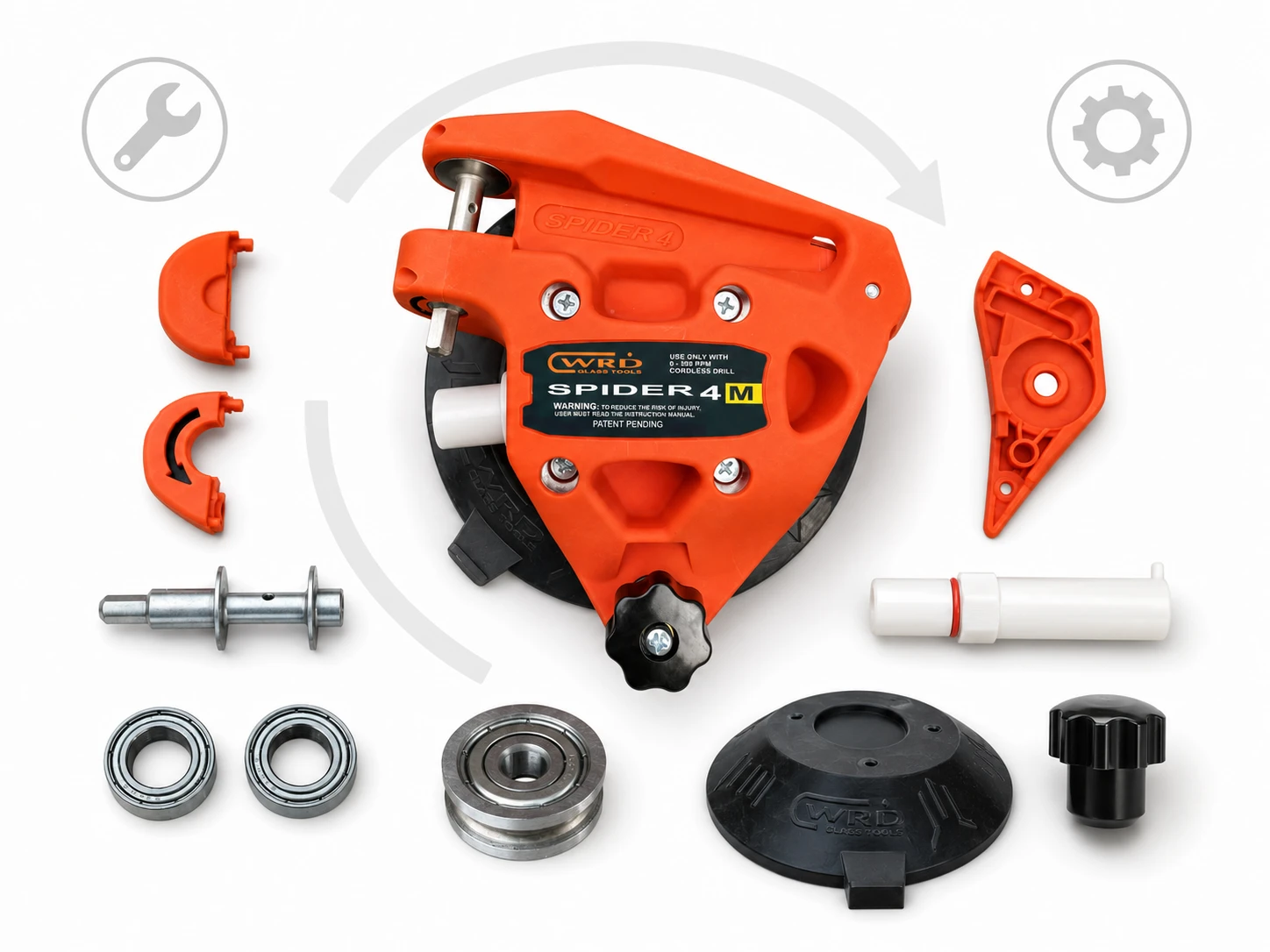
Many WRD tools are serviceable with replacement parts such as pumps, pads, spindles, covers, wings, bits, and hardware.
Answer
Many WRD tools are built with serviceable components. Common replacement parts include suction pumps, suction pads, spindles, covers, wings, bits, springs, bearings, cases, and hardware.
The key is matching the part to the exact tool version. Tool model, SKU, and the worn or damaged component name help avoid ordering a part that fits a similar tool but not yours.
WRD products are available through distributors. Use the distributors page to find a representative for your region.
Answer
WRD products are available through distributors. Availability can vary by region and product, so use the distributors page to find the best contact for your area.
Duties and customs charges depend on destination, carrier, shipment value, product classification, and customs processing.
Answer
Duties and customs charges depend on destination, carrier, shipment value, product classification, and customs processing. If duties are assessed on postal shipments, they are usually collected from the receiver before delivery.
Courier shipments may offer clearer customs handling or prepaid duty options, but they can also include brokerage, document-processing, duties, or other customs-related charges.
Courier shipping is the better option when duties need to be handled up front. Postal shipping is less reliable for prepaid duties.
Answer
Courier services such as UPS, FedEx, or DHL are better suited when duties need to be handled up front. Postal service is usually less reliable for prepaid duties.
If prepaid duties are important, choose a courier option and confirm the service before shipment.
Courier shipping can cost more because it may include brokerage, duties, document processing, or other customs-related charges.
Answer
Courier shipping can cost more because it may include brokerage, document processing, duties, or other customs-related charges.
The tradeoff is that courier shipments are usually easier to track and manage through customs. Postal service can cost less, but customs handling may be less predictable.
Use the tracking number, order number, and any customs notice to work out what the carrier or customs office needs next.
Answer
If a shipment is stuck in customs, start with the tracking number, order number, and any customs notice or document request. Those details tell you whether customs is waiting, asking for paperwork, or routing the package back through the carrier.
Once a shipment is in customs, release timing is controlled by the carrier and customs authorities.
Postal service is often lower cost. Courier service usually gives more structured customs and brokerage handling.
Answer
Postal service can be lower cost, but customs handling may be less predictable and duties, if assessed, are often collected from the receiver before delivery. WRD may also have fewer options to intervene once a postal shipment is in customs processing.
Courier services such as UPS, FedEx, or DHL can provide more structured customs and brokerage handling, but costs may be higher.
Spider 3/3M and Spider 4/4M are related Spider removal systems, but parts and setup details are not always interchangeable.
Answer
Spider 3, Spider 3M, Spider 4, and Spider 4M are all Spider-family cutting-line removal systems. They are related systems, but parts and setup details are not always interchangeable.
If you are choosing a system, compare the kit configuration and the way your shop wants technicians to work. If you are servicing one, identify the exact Spider model before matching cups, body components, spindle/shaft parts, or cases.
Check whether your tool is standard Orange Bat or Orange Bat QC, especially when matching quick-connect handles and hooks.
Answer
Standard Orange Bat and Orange Bat QC are related, but QC adds quick-connect hardware and different attachment points. Parts such as quick-connect handles and hooks should be matched to the QC version.
The easiest identifier is the connection hardware on the tool. If the replacement part depends on that connection point, treat standard Orange Bat and Orange Bat QC as different versions.
Bison is the larger Bat-style option for bigger panels, commercial-vehicle work, or technicians who want a heavier-duty setup.
Answer
Choose Bison when the job is larger than the work you would normally put on an Orange Bat QC, especially larger fixed glass or commercial-vehicle work. It keeps the Bat-style approach but gives the technician a larger, heavier-duty setup.
Choose Orange Bat QC when flexibility, a smaller setup, and everyday repair-center use matter more than the larger Bison format.
The 4-inch Removal Dock helps remove quarter glass with a compact dock-style setup made for smaller fixed glass panels.
Answer
The 4-inch Removal Dock is made for quarter-glass removal. It gives the technician a smaller dock-style setup for controlled line work on smaller fixed glass panels.
If you need parts for it, match them to the 4-inch Dock model rather than assuming Spider, Orange Bat, or Bison parts will fit.
The Fiber Line Hand Puller gives the technician a controlled grip point for manually pulling cutting line.
Answer
The Fiber Line Hand Puller is for jobs where the technician needs to pull fiber line by hand with better control than wrapping or grabbing the line directly.
It is most useful as a supporting accessory in removal workflows where line position, hand control, or a short manual pull matters.
PRO6 is the installation system. Handling cups are the cup components used for setting, anchoring, removal support, or positioning depending on the model.
Answer
PRO6 is WRD's installation system family. Handling cups are the cup components used inside those workflows, such as Anchor Glass Handling Cup, Base Handling Cup, and Removal Glass Handling Cup.
Match the cup to the job: setting and positioning glass, anchoring, or removal-related support. Cup role matters more than the generic name.
PRO6 kits differ by handling-cup setup and installation workflow. Choose based on how the technician sets and positions glass.
Answer
PRO6 kits are built around different handling-cup setups for installation work. The right kit depends on how the technician sets, supports, and positions the glass.
When comparing kits, focus on cup roles, arms/hooks, and whether the job needs the extra handling options of the larger kit.
Hand Crank 360 is for workflows where the technician wants manual crank control instead of drill-driven operation.
Answer
Hand Crank 360 is a manual cranking accessory. It is useful when the technician wants controlled hand operation rather than relying on a drill.
Check compatibility with the tool you are using before buying it, because hand-crank support depends on the system and setup.
WRD offers multiple cutting-line series, including FN9, P10, P6, P8, PN8, X, XN96, and SF301. Pick line by tool and job, not just by name.
Answer
WRD has several cutting-line series for different removal preferences and applications, including FN9, P10, P6, P8, PN8, X, XN96, and SF301.
The practical choice depends on the tool, glass, line management preference, and how aggressive or reusable the technician wants the line to be. P8 and PN8 are often compared because P8 is marked and PN8 is unmarked, but they are only part of the full line range.
Marked line helps technicians manage how much line is in use, especially in more standardized Spider-style workflows.
Answer
Marked cutting line can make line management easier because the technician can see how much line is being used. That is one reason P8 is often preferred with Spider-style workflows, where a consistent amount of line is useful.
Unmarked line such as PN8 can make sense for more varied Bat-style techniques where the setup and application may change more from job to job.
Angle drivers, bit holders, U bits, S4 bits, Bison bits, and clutch tools support specific WRD removal setups.
Answer
WRD removal systems use several driver and bit accessories, including angle drivers, bit holders, long and short bits, U bits, S4 bits, Bison bits, adapters, and clutch tools.
The important detail is fit. Match the bit or driver to the tool system you are using instead of assuming one accessory works across every WRD setup.
Common suction-related parts include suction pumps, side-release pads, rubber pad filters, O-rings, plunger lube, and protective covers.
Answer
Common suction-related service parts include suction pumps, side-release pads, rubber pad filters, O-rings, plunger lube, and protective covers.
If suction is weak, start with cleaning and a smooth-glass test. If the cup seals but slowly loses vacuum, the likely areas to check are the cup edge, pump action, O-ring, and pad condition.
WRD pinch-weld tools cover urethane trimming, scraping, blade work, and sharpening around the glass opening.
Answer
Not every WRD tool is a glass removal or installation system. WRD also has pinch-weld and cutting/prep products such as the Scraper Tool, Stingray blades, Moon blades, Rhino Knife, Rhino blades, Diamond Sharpening Pen, and Diamond Sharpening Stone.
Choose the scraper, knife, or blade size based on the urethane thickness and prep work needed.
WRD also makes support tools for trim, clips, wiper arms, dash protection, molding protection, and access work around the glass.
Answer
WRD is not only removal systems and installation cups. The tool range also covers the surrounding work: clips, trim, wiper arms, dash protection, molding protection, install sticks, pick tools, tap knives, and pry tools.
These tools help remove or protect trim, paint, dash surfaces, clips, and wiper hardware during the glass job.
ePump and PRO7E are powered WRD handling products for specific suction, cup, and installation setups.
Answer
ePump, ePump X, and PRO7E are powered WRD products tied to specific suction, cup, and installation setups. They are not generic replacements for every suction or handling tool.
Match the powered component to the exact tool, cup, and workflow you are using.
Black Edition tools may need Black Edition or model-matched parts, so identify the exact tool when replacing components.
Answer
Some WRD tools and assemblies have Black Edition versions. Match replacement parts by the exact product name and SKU, not color alone.
If a part is for Orange Bat QC, Spider, Bison, Anchor Cup, or another assembly, match both the model and the edition.
Line usually breaks because it is snagged, riding at a bad angle, cutting into a hard obstruction, or being forced with too much torque.
Answer
Most line breaks are not simple tensile failures. They often happen when the line hits a hidden clip, alignment pin, hard molding, heater grid, or another obstruction that fiber line is not meant to cut through.
Line can also break when it rides too high, climbs into the laminated glass edge, or gets pulled at a sharp angle. If the line suddenly gets hard to move, stop adding drill torque. Back off tension, reset the line path, and work past the obstruction carefully before continuing.
Stop pulling, release some tension, and reset the line path. Do not force a snag with more drill power.
Answer
If the line snags, stop before adding more torque. More power can snap the line or pull the tool out of position.
Release some tension, check where the line is contacting the glass, urethane, molding, or clips, and work the line back into the correct path. If needed, use controlled hand movement to ease past the obstruction before returning to the tool.
Spider 4M refines the Spider 4 layout with a male hex drive, improved pump access, and a door-striker notch for some quarter-glass setups.
Answer
Spider 4M is an updated Spider 4-style removal system. The most practical changes are the male hex drive connection, more clearance around the pump area, and the door-striker notch.
The male hex connection makes drill engagement more direct. The extra pump clearance can help when accessing the suction pump. The door-striker notch gives the technician another anchoring option on some quarter-glass jobs where there is not enough flat glass for a normal suction position.
It gives Spider 4M another anchor option for some quarter-glass jobs where there is not enough flat glass for normal suction placement.
Answer
Quarter glass can be small, curved, or awkward, which can make suction placement difficult. The Spider 4M door-striker notch is meant to give the tool another anchoring option by using the vehicle door striker area when the job allows it.
Use it only where the setup is stable and appropriate for the vehicle. If the tool cannot sit securely, reset the approach instead of forcing the cut.
Treat Bison and Orange Bat as separate platforms. Do not assume spools, shafts, pads, or body parts interchange.
Answer
Bison is a larger Bat-style system, but it is not just an Orange Bat with bigger labels. It uses larger-duty components for larger glass and commercial work.
Match parts to the Bison or Orange Bat platform specifically. Spools, shafts, pads, body parts, and cases need to match the exact tool model.
ePump is most useful when a job needs active suction support for a longer or heavier-duty setup.
Answer
ePump is for situations where maintaining suction matters over a longer or heavier-duty workflow. That is most relevant on larger glass, commercial work, or setups where a manual pump cup may need more attention during the job.
Use it with compatible WRD equipment only. If the job does not require active suction support, a standard manual pump setup may be enough.
PRO6 supports the glass so one technician can control the swing, height, and final placement instead of carrying the full weight by hand.
Answer
PRO6 is built to help one technician set glass with more control. The handling cups and arm setup support the windshield so the technician can guide the glass into position instead of carrying the full weight while trying to align the urethane bead.
The practical benefit is control: smoother movement, less strain, and more time to focus on placement.
Cup release usually comes from poor surface prep, bad cup placement, side load, damaged cup edges, or the setup pushing against the cup at the wrong angle.
Answer
If a PRO6 or handling cup releases during setup, check the basics first: clean glass, clean cup, full pump indicator, and a smooth mounting surface.
Then look at the geometry. A cup can lose hold if the glass or arm setup pushes sideways, twists the cup, or creates leverage against the seal. Reset the cup position and tool angle so the load stays stable through the movement.
Use Rhino Knife for knife-style urethane trimming and Stingray blades for scraper-style pinch-weld preparation.
Answer
Rhino Knife and Stingray blades solve different prep problems. Rhino Knife is a cold-knife style tool for trimming urethane. Stingray blades are scraper-style blades for cleaning and shaping the remaining urethane on the pinch weld.
If the job needs cutting or trimming, look at Rhino Knife. If the job needs controlled scraping and surface prep, look at the Stingray blade sizes and scraper setup.
Tight gaps usually call for a thinner line approach. Heavy urethane usually calls for a stronger, heavier-duty line and a tool that can handle the load.
Answer
For tight gaps, technicians usually look for a thinner line that can move through the space without lifting into trim, paint, or the glass edge. For heavy urethane or commercial glass, the line and tool both need to handle higher load.
Do not choose line by strength alone. Match the line to the gap, urethane, tool, and whether the goal is speed, glass salvage, or durability through a tough cut.
No answers found
Try a broader search, or send the question with your product model, photos, and order details if service is involved.
Ask a QuestionVideo Guides
Pick a path or filter by product. These videos are for technicians trying to see the setup or workflow, not browse a media library.
WRD Orange Bat - Quarter Glass
Removal setup, line routing, and workflow technique.
WRD Orange Bat - Removal Guide
Removal setup, line routing, and workflow technique.
WRD Spider - Removal Guide
Removal setup, line routing, and workflow technique.
PRO6 Install System - Guide
Installation, setting, and handling workflows.
WRD Handling Cup - Usage Guide
Setup, workflow, and product guidance.
WRD Hand Puller - Demo
Setup, workflow, and product guidance.
WRD PRO6 - Hand Crank 360 Demo
Setup, workflow, and product guidance.
WRD PRO6 - System Demo
Setup, workflow, and product guidance.
No matching videos
Try another product filter or use FAQ search for written guidance.
Documents & Forms
Use this section when you need official files, manuals, forms, or policy pages instead of troubleshooting copy.
Instruction Manuals
Spider 4 - Instruction Manual Spider 3 - Instruction Manual Orange Bat - Instruction Manual Orange Bat QC - Instruction Manual Pro6 - Instruction Manual 4 Inch Removal Dock - Instruction ManualForms & Service Links
Warranty Registration Partner Application Warranty Policy Warranty Service Request Find DistributorsService & Warranty Help
Start with the type of help you need. The right details up front make it easier for WRD to identify the tool, confirm the path, and avoid back-and-forth.
For Tool Issues
- Tool model or SKU
- Purchase source and order details if available
- What changed and when it started
- Photos if damage, fitment, or visible wear is involved
For Parts
- Exact tool model or version
- Part name if you know it
- Clear photo of the part or tool area
- Shipping address and phone number for delivery
For Shipping
- Order number or distributor
- Destination country
- Tracking number if you have it
- Any courier or customs notice received